



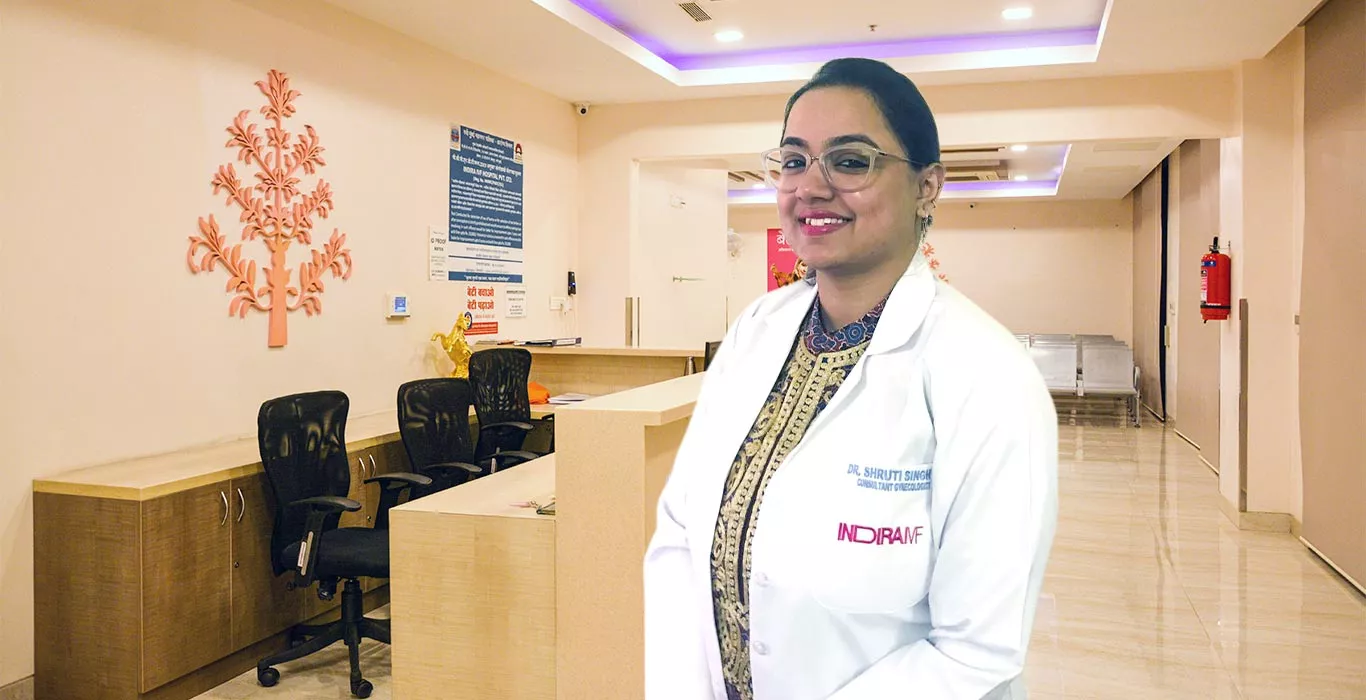


About Dr. Shruti Singh
Dr. Shruti Singh is the Centre Head at Indira IVF, Delatoli, Ranchi, and the Cluster Clinical Director for the East Zone. She brings over 10 years of experience in obstetrics and gynaecology. Her areas of expertise include IVF, IUI, hysteroscopic procedures, PCOS management, recurrent pregnancy loss management and the care of high-risk pregnancies.
She has completed her MBBS and MS (Obstetrics and Gynaecology) from MUHS, Nashik. To further improve these skills, Dr. Shruti undertook specialised training in Basic and Advanced OBGY Scans at the FOGSI-certified Chikitsa Ultrasound Training Centre in Chembur, Mumbai. She also earned an Advanced Diploma in Reproductive Medicine from the Keil School in Germany, broadening her expertise in emerging fertility techniques and reproductive diagnostics.
Fluent in English and Hindi, Dr. Shruti offers empathetic counselling and clear communication to support patients throughout their fertility journey. She is a lifetime member of IFS (Jharkhand Chapter) and ISAR (Jharkhand), reflecting her commitment to continuous learning and professional excellence.
Work Experience
- Centre Head – Indira IVF, Delatoli Ranchi, Jharkhand
- Cluster Clinical Director – East Zone
Education & Training
- MBBS
- MS (OBGY)
- Trained in Basic & Advanced OBGY Scans
- Advanced Diploma in Reproductive Medicine
Awards and Recognitions
- Fertility TV Award, Iconic Gem of Reproductive Medicine Jharkhand, 2023
- Medlife Asia Healthcare Group Health TV Awards, Excellence in Healthcare in Reproductive Medicine, Jharkhand, 2023
Memberships
- Lifetime Member – IFS, Jharkhand Chapter
- Lifetime Member – ISAR, Jharkhand
Publications
- Effect of Various Antenatal Factors on Amniotic Fluid Index - Med Plus – International Medical Journal, Vol. 2, Issue 3, March 2015, pp. 156–159.
- A Study of Effect of Amniotic Fluid Index on Mode of Delivery - International Journal of Recent Trends in Science and Technology, Vol. 14(3), pp. 567–570.
- Fetus and Bioethics - Indian Journal of Maternal-Fetal and Neonatal Medicine, Vol. 3, No. 2, July–Dec 2016, pp. 101–106.
- Etiological Factors for Dysmenorrhoea in Adolescent Girls - Indian Journal of Trauma and Emergency Paediatrics, Vol. 8, No. 3, Sept–Dec 2016, pp. 235–236.
- A Study of Assessment of Fetal Weight in Term Pregnancy by Hadlock’s Formula Using Ultrasound and Comparison With Actual Birth Weight of Baby - Indian Journal of Obstetrics and Gynaecology, Vol. 4, No. 3, Sept–Dec 2016, pp. 211–214.
- A Study of Assessment of Fetal Weight in Term Pregnancy by Abdominal Girth and Symphysiofundal Height & Comparison With Actual Birth Weight of Baby - Indian Journal of Maternal-Fetal and Neonatal Medicine, Vol. 4, No. 1, Jan–June 2017, pp. 29–32.
- A Study of Assessment of Fetal Weight in Term Pregnancy by Johnson’s Formula & Comparison With Actual Birth Weight of Baby - Indian Journal of Obstetrics and Gynaecology, Vol. 5, No. 1, Jan–March 2017, pp. 23–26.
- Clinical Manifestations of Fibroid Uterus Presenting as Abdominopelvic Lump - Indian Journal of Obstetrics and Gynaecology, Vol. 5, No. 2, April–June 2017, pp. 129–135.
- Evaluation of Etiological Factors for Early Antenatal Bleeding in a Tertiary Care Centre - Indian Journal of Maternal-Fetal and Neonatal Medicine, Vol. 2, No. 2, July–Dec 2017, pp. 165–172.
- Cell Free Nucleic Acid: An Approach to Understanding - Indian Journal of Maternal-Fetal and Neonatal Medicine, Vol. 2, No. 2, July–Dec 2017, pp. 218–222.
- Ultrasonic Measurement of Fetal Femur Length in Assessment of Gestational Age in Third Trimester - Indian Journal of Obstetrics and Gynaecology, Vol. 5, No. 3, July–Sept 2017, pp. 347–352.
- Efficacy of Ormeloxifene in the Management of Dysfunctional Uterine Bleeding - Indian Journal of Maternal-Fetal and Neonatal Medicine (Received article acceptance letter).
- The Efficacy and Safety of Norethisterone in the Management of Dysfunctional Uterine Bleeding - Indian Journal of Maternal-Fetal and Neonatal Medicine (Received article acceptance letter).
- Clinical Profile of Patients With Dysfunctional Uterine Bleeding at a Tertiary Care Hospital - Indian Journal of Maternal-Fetal and Neonatal Medicine.
Specialty Interest
- In-Vitro Fertilisation (IVF)
- Intrauterine Insemination (IUI)
- Hysteroscopic procedures (diagnostic & therapeutic)
- PCOS management
- Recurrent pregnancy loss (RPL) management
- High-risk pregnancy management
Visit Now!
Indira IVF Fertility Center - Delatoli
Royal Square 5th floor, Opp. Punjab National Bank, Above Firayalal Super Market, Argora Chowk Delatoli Jharkhand India
View Centre Details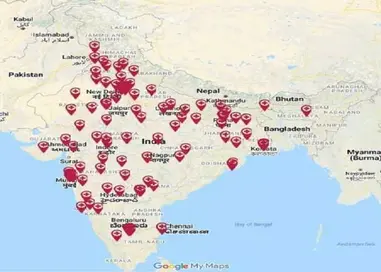
Fertility & IVF related FAQs
The procedure is not painful as it is done under light sedation. But, at times it may cause mild discomfort. At our clinic, we use mild anaesthesia administered through an IV route which relieves discomfort.
Success rates strongly depend on the age of the patient, their condition, medical history and the line of treatment administered.
The IVF procedure can be prescribed in cases where the other fertility treatments have failed, or if the chances of a successful pregnancy are higher with this method than with any other treatment.
If there are no contraindications, the procedure can be carried out simply at the request of the couple by considering that precise time as the right time for IVF.
- Tubal-peritoneal factor -
Violation of the patency of the fallopian tubes leads to the fact that the egg cannot penetrate the uterine cavity. In this case, you can either try to restore patency using a surgical laparoscopic operation or perform IVF and implant an already developing embryo into the uterine cavity.
- Male factor -
This diagnosis is made when the quality of sperm is not high enough. If the number of healthy active sperm is too low to conceive a healthy child, it is better to resort to ART treatments like IVF, IUI, ICSI, etc.
- Endometriosis -
Mild forms of endometriosis usually respond to surgery and hormonal treatment. If, after the therapy, pregnancy does not occur, then the doctor sends the couple for an IVF procedure.
- Age-related infertility -
Age plays a vital role when we talk about deciding the right time for IVF. With this factor of infertility, it is better to supplement the standard IVF procedure with ICSI and assisted hatching methods.
- Anovulation -
Anovulation is usually treated with simpler methods, such as hormonal stimulation combined with IUI. But if it’s unsuccessful, you can always use the IVF method.
- Unexplained infertility -
If it is not possible to establish an accurate diagnosis, and the therapy is unsuccessful, then the doctor may advise the couple to resort to the IVF procedure.
In this process, the female egg is taken out under anaesthesia and fertilized with the husband’s sperm in the lab. The embryo formed after 3-5 days is transferred back to the uterus.
May involve 2-3 visits:
- One day for check-up / Pre-IVF preparation
- 15 days for IVF procedure (Second Visit)
- Embryo transfer
Other experts in Ranchi
All tests and treatments are performed by our experts. You can request for an appointment with any of our experts.